

6.6 Inattentive or Erratic Driving
Defensive driving includes keeping a safe distance around your vehicle. When another driver makes a mistake, you need time to react. Allow yourself this time by keeping a “space cushion” on all sides of your vehicle. The space cushion is the area around your vehicle.
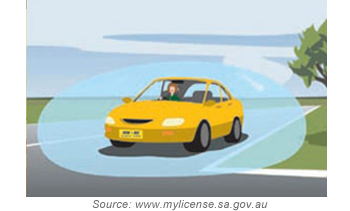
Be alert to vehicles on either side, to the front of, and to the rear of your car. Check the other traffic lanes by using your mirrors and by periodically turning your head to look quickly to the side, checking over your shoulder. Look through the other driver’s windows, if you can, to see the traffic in front of him, so that you have even more time to respond to something hazardous ahead.
Leave enough space between you and the vehicle ahead of you for safe stops. The space in front of your vehicle is your ‘control space’. Use the control space to maintain a 3 – 4 second distance between you and the car in front of you.
While driving, you should be looking down the road 10 – 15 seconds ahead of your vehicle so you can see hazards early. In the city, 10 – 15 seconds is about one block. On the highway, 10 – 15 seconds is about a quarter of a mile.
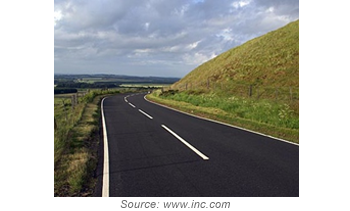
The space to the side of your car is also important. While you cannot control the other car, you can control where you are in relation to the other car. Never place your car in a position where the other driver cannot see you in his mirrors. Do not drive in the other driver’s blind spot.
The space behind you is incredibly important as well, although you do not have as much control over this. If you are being tailgated, your best option is to signal right and merge safely to the next lane so that the tailgater can move on ahead of you. If there is no lane to your right, then simply slow down slowly to create more space in front of you, so that the tailgater will be encouraged to pass you.
6.6.1 Food for Thought
Other drivers’ poor skills can affect your safety. You can compensate for their shortcomings by being aware of the elements around you. You should keep an eye out for drivers who are:
- Making an unsafe turn in front of you.
- Not aware of your vehicle when they are making a lane change.
- Neglecting traffic signs or signals.
- Not yielding to vehicles or hazards.
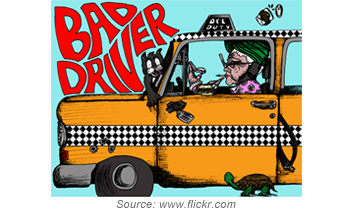
A driver’s behavior can be unpredictable. If you watch the traffic around you and know how to react properly, you will be able to avoid a collision with an erratic driver’s vehicle. Watch for unusual movement, keeping in mind that unsafe drivers will not be considerate of your presence in their path. You should be able to identify hazardous drivers long before you get anywhere near them.
Major Driving Errors
Although you cannot control the behavior of other drivers, you can make sure that you are considerate driver. Never make the following mistakes:
- FAILURE to obey traffic laws
- NEGLECT towards the maintenance of your vehicle. It is a misdemeanor to operate a vehicle that poses a risk to other people
- DISCOURTESY to other drivers/combativeness
- LACK of driving knowledge
- BAD judgment or poor decision-making
6.6.2 Compensating for the Mistakes of Other Drivers
Although you may encounter bad drivers every day, you do not have to pay for their mistakes. If you see an inattentive or erratic driver, try analyzing the risks. If you can identify several potential hazards, you can then plan your reaction to them one at a time.
Identify the Greatest Threat
When you cannot break down the risks and focus on just one, you will have to decide which poses the greatest threat to you. Chose to react to the hazard that is the most avoidable and do your best to restore safety to you driving environment.
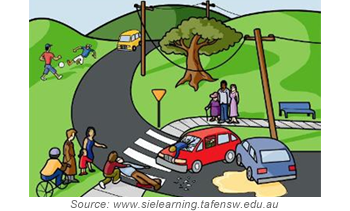
Safe Space Cushion to the Sides
As discussed earlier in this lesson, you should always maintain a space cushion around your vehicle. You may find your vehicle boxed in when there are other vehicles, pedestrians, or hazards in the space on both sides of you. When this happens, maintain a safe space cushion by adjusting your speed and lane position.
Dealing with Tailgaters
A driver that tailgates you has less room to stop safely, limiting your ability to slow down quickly in an emergency situation. This driver may have more control over this space behind you, but you can still maintain your safety by:
- Communicating with the tailgater by using your turn signals or flashing your brake lights.
- Allowing more space ahead of you by increasing your following distance.
- Moving to the right lane if you are on a multilane highway to allow the tailgater to pass.
- Reducing your speed to encourage the tailgater to pass.
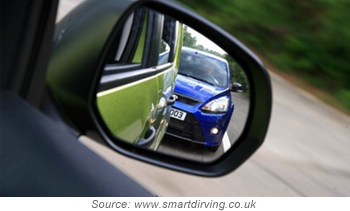
Note: Do not focus on the tailgater so much so that you lose sight of what is happening in front of you.